
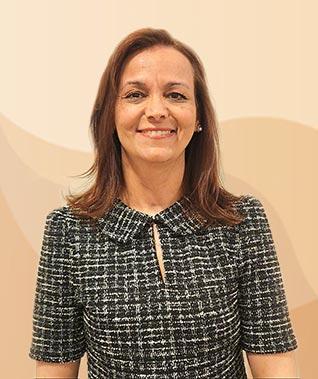
Maintaining an ethical interpreting practice while living with Pompe disease
I have been practising as an interpreter since 2010, and I am now a Certified Specialist Legal Interpreter. For me, interpreting has never been just a job; it is my calling. It is work built on trust, responsibility and service. It allows me to stand, quietly and carefully, at the point where people need to understand and be understood.
My love of languages began long before I became an interpreter. I was born in Syria and studied commerce and economics at the University of Damascus, but languages were always part of my life. My late father spoke several languages, and inspired by him, I studied French for four years at the French Cultural Centre in Damascus and later received a scholarship to study in France. This changed me personally and professionally.
After returning to Damascus, I worked as an Arabic–French interpreter in a private organisation and later at the Canadian Embassy, where Arabic, French and English were vital assets.
I migrated to Australia in 2000 and quickly discovered that knowing English from books and living in English are two very different things. So I kept learning. I enrolled in a NAATI workshop and became accredited at the Paraprofessional level. A year later, after further training and experience, I progressed to Professional Interpreter and later became a Certified Interpreter under the new certification system.
Over the years, I continued attending professional development in legal, medical and community interpreting, as well as ethics. In 2024, I received a TIS National scholarship to study Specialised Legal Interpreting at Monash University, completing the course in 2025 with High Distinction. In 2026, I passed the NAATI Certified Specialist Legal Interpreter test, becoming the first Arabic interpreter in Australia to receive this certification. This was a proud moment, not because it came easily, but because it did not.
My personal life has been less straightforward. In 2012, after eight years of unexplained symptoms, I was diagnosed with Pompe disease, a rare genetic degenerative condition. Pompe disease is often invisible. People may not see the fatigue, weakness, pain or planning behind ordinary daily tasks. Living with this condition has taught me patience, realism and deepened my understanding of equity, access and communication rights. When you experience barriers yourself, you become more aware of how much depends on clear communication, fairness and being properly understood.
Professionalism, for me, is not about pretending everything is easy. It is about knowing my limits, preparing carefully, making ethical decisions and protecting the quality of my work. Managing a chronic condition alongside interpreting has made me more reflective, not less committed.
Arabic interpreting involves dialects, cultural nuance, emotion and often high-stakes communication. Accuracy is not a technical detail. It can affect informed consent, access to services, procedural fairness and dignity.
Interpreting is also about care, attention and presence. A good interpreter must be accurate and impartial, but also deeply human. Living with Pompe disease has taught me to adapt, pause, return and begin again. To me, being an interpreter means lifelong learning, ethical responsibility, and holding accuracy and humanity together.